Hypervisors (platform admin)
Proxmox endpoints the platform can build machines on — a layer under Docker Contexts: a context is where containers get scheduled, this is where the nodes that join one get built. It lives under Admin → Hypervisors and requires the platform-admin role.
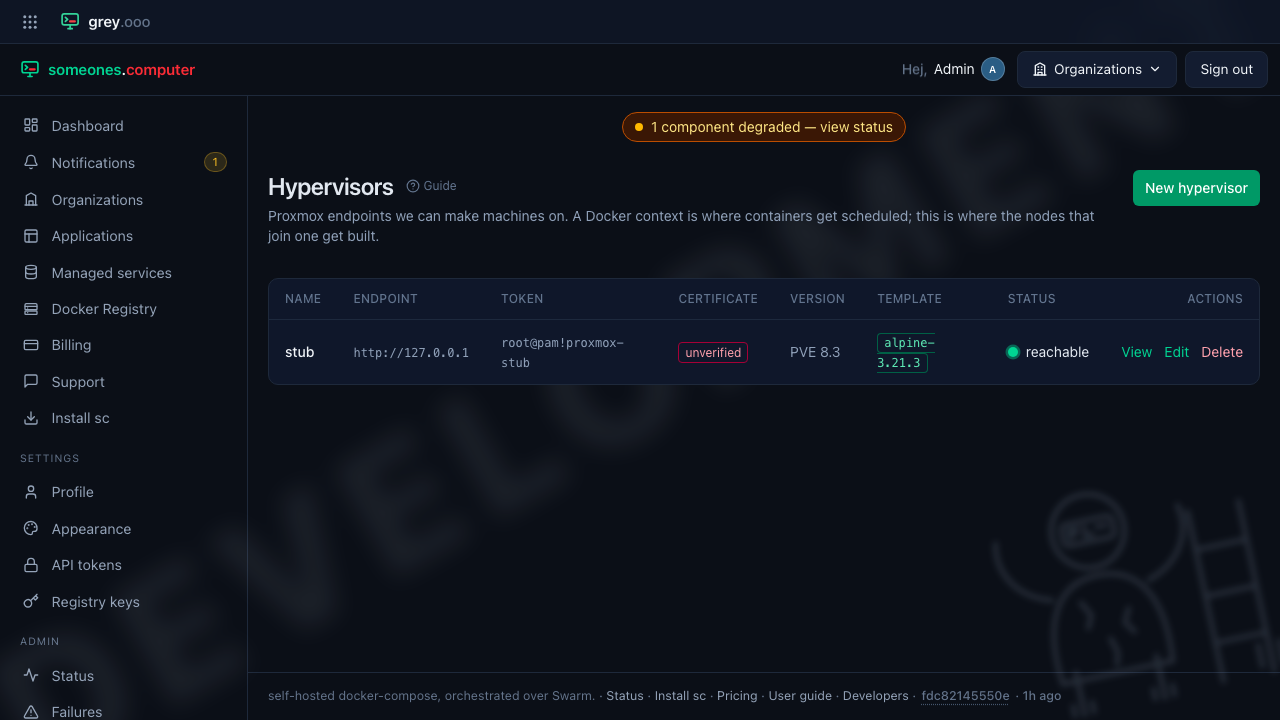
| Column | Means |
|---|---|
| Endpoint / Token | The API address and the token ID used to authenticate — the secret itself is write-only. |
| Certificate | pinned (one exact public key, no CA involved), CA verified, or unverified. |
| Version | The Proxmox VE release the endpoint reports, once it has answered. |
| Template | Whether an Alpine template has been baked here yet — the Machines wizard clones from it. |
| Status | Reachable, unreachable, or the token was rejected — probed live, not read off a stale column. |
Opening one shows the full picture, probed fresh on every visit — a GET never writes anything, so Check now exists to re-probe on demand without waiting for the next page load:
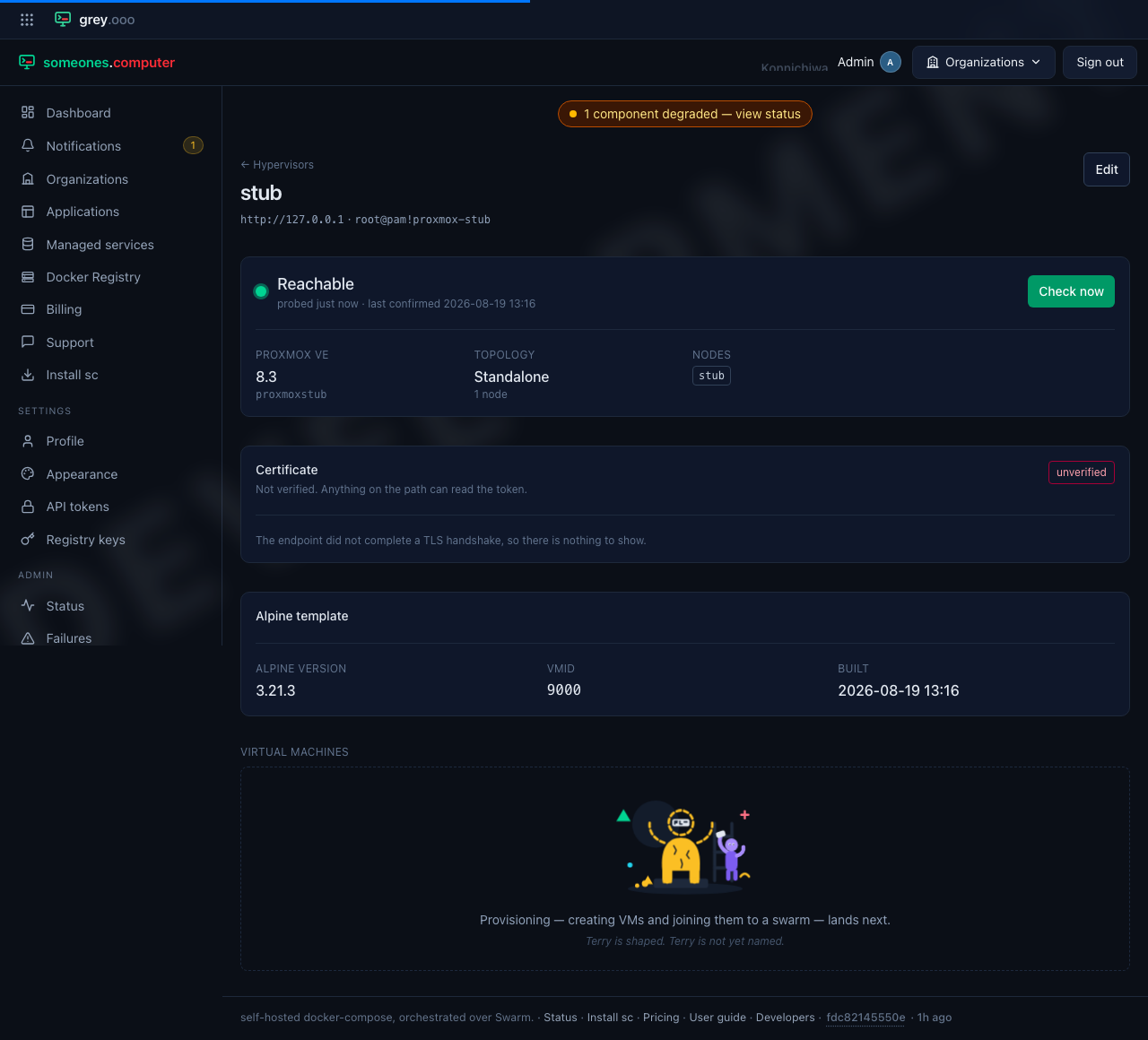
The certificate section is worth reading before pointing this at anything real. Three trust modes, same choice Docker Contexts offers for a context's own endpoint: pin one exact public key, verify against the public CA roots, or don't verify at all — the last one meaning anything on the path between here and the hypervisor can read the token. Pinning is the one that survives a self-signed certificate without asking you to trust a whole CA for it.
No template yet offers a Build template button once the endpoint is reachable — a one-time build VM that bakes Alpine using the same address pool a machine would, and takes several minutes. It runs from the console too, for a hypervisor this page can't reach directly:
app:proxmox:template <name> --ip <cidr> --gateway <ip>
Deleting a hypervisor destroys the stored token and forgets the endpoint — nothing on Proxmox itself is touched, and nothing already provisioned stops.